

 width="900"
height="225"
>
width="900"
height="225"
>
Do you remember watching the 2016 Rio Olympics and seeing the circular bruises on the backs of the shoulders of Team USA? It turns out that those marks were a result of Cupping Therapy, which dates back more than 3,000 years for its recovery benefits.
What Is Cupping and What Are the Benefits?
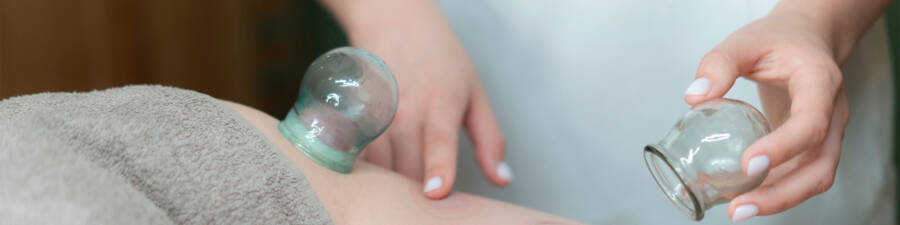
Cupping Therapy is an ancient form of alternative medicine in which a therapist places special cups (made of glass or silicone) on your skin to create suction. The purpose of this treatment is to help reduce pain and inflammation while promoting increased blood flow, relaxation, and well-being. Cupping therapy can be a type of deep tissue work. Here are six key points to consider about cupping to determine if it’s a suitable option for you.
1. Science Backs the Benefits
There are several potential benefits of incorporating cupping into your wellness routine. It can provide mechanical decompression (suction) effects by separating skin layers that could have scar tissue and/or restrictions. It also helps by increasing blood flow to the area and reducing pain stimuli by releasing other healing substances.
2. Silicone or Glass Cups are Common
Dry (fixed position) and Massage (gliding patterns) Cupping are the predominant styles of treatment. A cup can be applied to a single area for between 3 to 90 seconds, depending on the desired effects. Each type of cupping has varying levels of vacuum/suction, from mild to deeper force.
3. It’s a Great Option for Many Conditions
Cupping Therapy can be a great option when looking to decrease pain, promote healing, improve blood flow, improve range of motion, reduce restriction in soft tissue, and neurosensory reactivity, making it a potentially viable treatment for many individuals.
4. What to Avoid
Cupping Therapy may not be appropriate for patients with certain conditions, including bleeding disorders, infections, open wounds, severe health issues involving the heart or kidneys, rheumatoid disorders, DVT, dermatological conditions, or pregnancy. Consult a trained healthcare professional who can examine you to ensure that cupping can be a safe and effective treatment for you.
5. It’s Non-Invasive and Easy to Apply
A single cup or multiple cups can be applied to a patient in a resting position in a single area or gently glide across the skin through restricted tissue. Cups can be moved long, across, unload and/or rotational patterns to the muscle. Additionally, cups can be placed on an injured area, and the patient may be asked to gently move the body part. This will enable the tension under the cups to increase and decrease, which leads to greater motion and function of the spot.
6. Circle Marks are Common
Cupping should not cause pain; however, you may experience some skin tightness during treatment. Afterwards, you may experience bruising or notice skin discoloration, which is common, but there should not be severe discomfort.
Is Cupping Right for You?
Overall, a cupping session can increase blood flow, oxygen, and nutrients to the injured area, which can aid in muscle healing, reduce tension, and alleviate inflammation. If you are seeking treatment from a physical therapist for rehabilitation from sports or orthopedic pain symptoms, cupping may be a valuable addition to your treatment plan. At Athletico, we have healthcare providers trained in Myofascial Decompression/Cupping and are ready to help your recovery process. Schedule a free assessment to connect with one of our movement experts today!
*Per federal guidelines, beneficiaries of plans such as Medicare, Medicaid, Tricare, VHA and other federally funded plans are not eligible for free assessments.
The Athletico blog is an educational resource written by Athletico employees. Athletico bloggers are licensed professionals who abide by the code of ethics outlined by their respective professional associations. The content published in blog posts represents the opinion of the individual author based on their expertise and experience. The content provided in this blog is for informational purposes only, does not constitute medical advice and should not be relied on for making personal health decisions.
