

 width="900"
height="356"
>
width="900"
height="356"
>
Have you ever wondered what an athletic trainer (AT) does on a daily basis? Over the last decade or so, there has been a significant increase in the scope of an athletic trainer’s practice. Traditional athletic trainers worked in athletics – that could include secondary schools, colleges, universities, and with professional teams. Today, athletic trainers are employed in all different settings, including hospitals, sports medicine clinics, corporate and industrial health care programs, and even military bases.
One of the amazing things about being an athletic trainer is that every day brings something new! Athletic trainers have consistent daily tasks, but the day-to-day always look different no matter what setting you work in! Let’s break down what a day in the life of a high school athletic trainer looks like.
Daily Preparations
In the high school setting, athletic trainers typically begin their day around noon to start preparing for the day. They ensure that their radios are on, the athletic training room is clean and organized, and that necessary equipment is stocked and ready for use. Game and practice schedules are reviewed to see what events and practices are going on for the day, so they know what to prepare.
Additionally, ATs stock an AED, a radio for coaches to contact them for emergencies, a medical kit, and sometimes a foam roller or hand roller used to help athletes with stretching. These supplies are taken to their appropriate spots and are set up nicely for student athletes.
During the School Day
Once indoor and outdoor fields and courts are set up for practices and events, the athletic trainer will officially open the athletic training room doors for athletes to come in. The athletic trainer gets to school well before the student’s day ends. This allows students to be seen during the day for any injuries that may arise during PE class or at an event that may have happened the day prior. This can aid in helping the athletic training room run smoothly after school because evaluations are taken care of before the rush of pre-practice taping and rehab. This is also a good time to communicate with parents or coaches about the status of injured athletes and any necessary follow-up care.
As mentioned earlier, each day is different. Some days are packed with practices and events that make it harder to do documentation and paperwork until all events are done for the day. However, on other days, athletic trainers are able to do paperwork and documentation right after seeing a student-athlete.
Once that 3:00 pm bell rings, the athletic training room is no longer quiet. Student athletes begin lining up to sign in to receive a variety of treatments, such as:
- Wound care and first aid
- Applying athletic tape, bandages, and braces to protect or prevent injuries
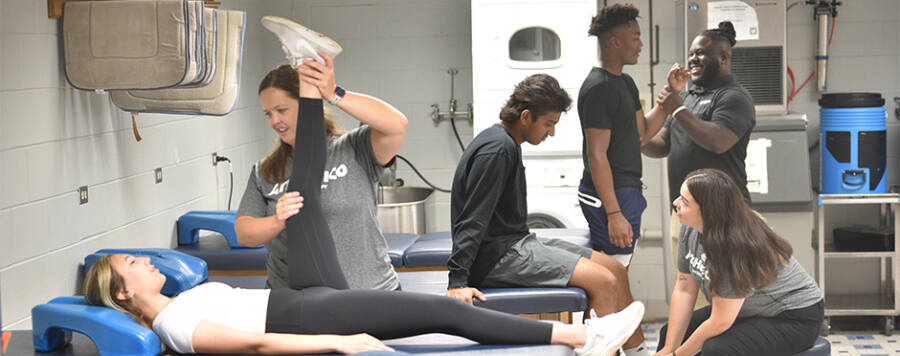
- Stretching techniques
- Implementing rehabilitation programs for injured athletes and developing injury prevention programs
- Follow-up care
- Evaluating injuries and determining if further evaluation by an Orthopedic doctor is necessary
Afternoon practices typically start about 15-20 min after school dismissal. This allows athletes to get changed, see their athletic trainer for any medical care, and head out to their sport. Once the athletic trainers take care of most of their student athletes, they may watch practices. Athletic trainers have radios on them at all times in case of emergencies. With so many different teams practicing at once in all different locations, it is the quickest way for coaches to get a hold of their athletic trainers when an athlete gets injured.
Game Days
Athletic trainers usually assist home and away teams during games and events because high schools don’t typically travel their athletic trainers unless it is for football games or any type of regional or playoff game.
The athletic trainer stays after to provide evaluations and treatments for any athletes who may have been injured during practice or their game. Once games and practices are finished, the athletic trainer cleans up the field and brings all supplies inside to get reorganized for the next day. Once everything Is cleaned up, athletic trainers take the time to finish up any documentation and paperwork. The athletic trainer leaves the school for the day, knowing that they’ve helped keep student-athletes safe and healthy and will be back at it again tomorrow.
Weekend Responsibilities
Saturday mornings vary depending on the season. For example, athletic trainers typically arrive at 6:30 am during the fall season. Saturday mornings usually call for some soccer games or tennis matches. Saturday mornings are fun and relaxing, especially after a Friday night football win! Athletes start arriving for morning practices or games, and the athletic trainer begins by doing pre-practice evaluations on any athletes who have injuries or who may be at risk for injuries.
A Rewarding Career
Being an athletic trainer at a high school can be a demanding job, but it’s also a rewarding one. By helping student-athletes prevent and recover from injuries, athletic trainers play a crucial role in the success of the school’s athletic programs.
Now that I opened your mind to what a day in the life of an athletic trainer is, those interested in entering this exciting field will not regret it! Keep following your dream and be ready to change the lives of athletes!
The Athletico blog is an educational resource written by Athletico employees. Athletico bloggers are licensed professionals who abide by the code of ethics outlined by their respective professional associations. The content published in blog posts represents the opinion of the individual author based on their expertise and experience. The content provided in this blog is for informational purposes only, does not constitute medical advice and should not be relied on for making personal health decisions.
